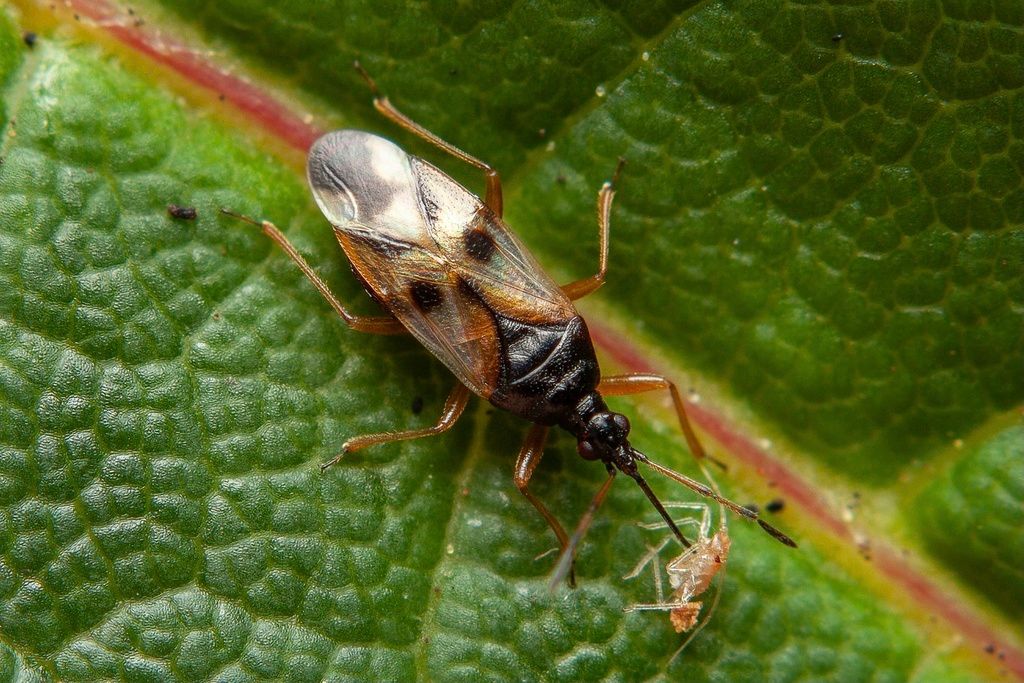
Common Flower Bug
Anthocoris nemorum
The common flowerbug is a common minute pirate or flower bug. A. nemorum was first described by Carl Linnaeus in 1761 in his Systema Naturae. A. nemorum is widely distributed across Europe and parts of Asia, extending into temperate regions of North America. Adults measure 3-4 mm and are recognized for their elongated bodies and reflective forewings. The species is valued in agriculture as a natural enemy of Aphid, Psyllid, Thrips, mites, and small caterpillars, making it an important component of Integrated pest management (IPM) programs. A. nemorum thrives in diverse habitats, including hedgerows, forests, orchards, and vegetable crops, and its ability to overwinter in bark and leaf litter ensures persistence across seasons. By reducing reliance on chemical pesticides, this generalist predator contributes to sustainable crop protection and ecological balance. It is considered beneficial in agriculture due to its role in controlling aphid populations. It has been used as a biological pest control since 1992, primarily to control Cacopsylla pyri. Adults can be found all year. A. nemorum lays its eggs inside plant leaves often in groups of 2-8. Larvae hatch light reddish-brown and develop into adults over several weeks. Adults overwinter beneath bark or leaf litter, which allows populations to persist across seasons. It is capable of biting humans.
- Scientific name
- Anthocoris nemorum
- Family
- Anthocoridae